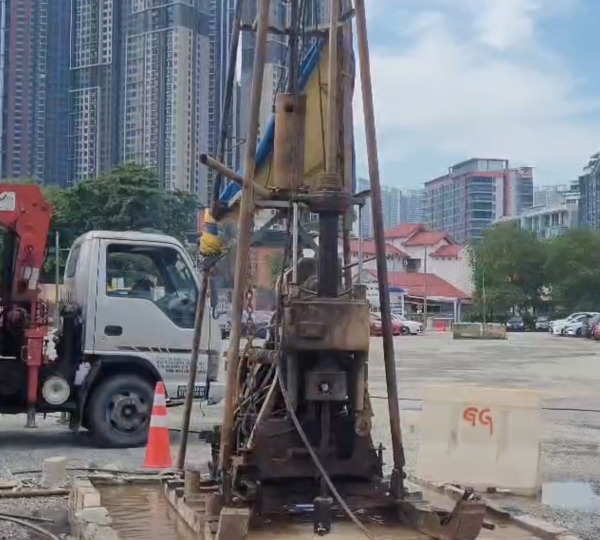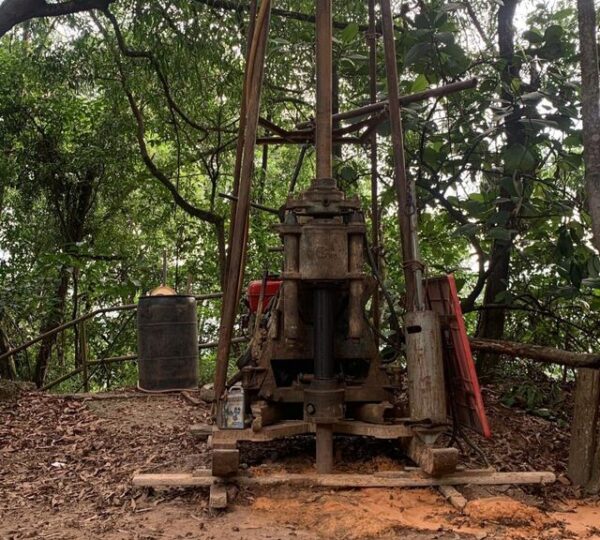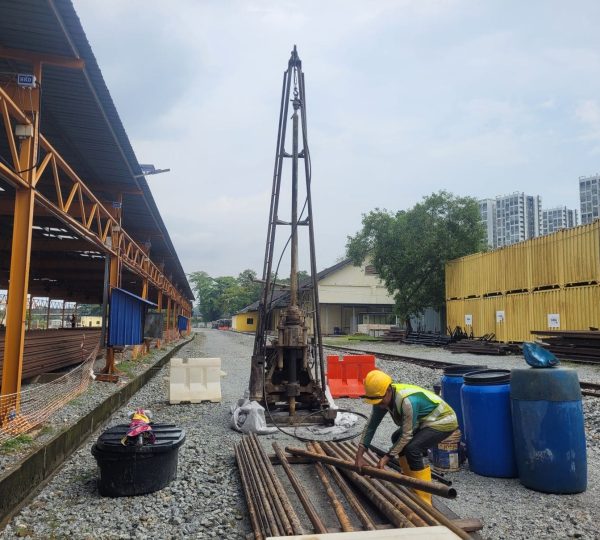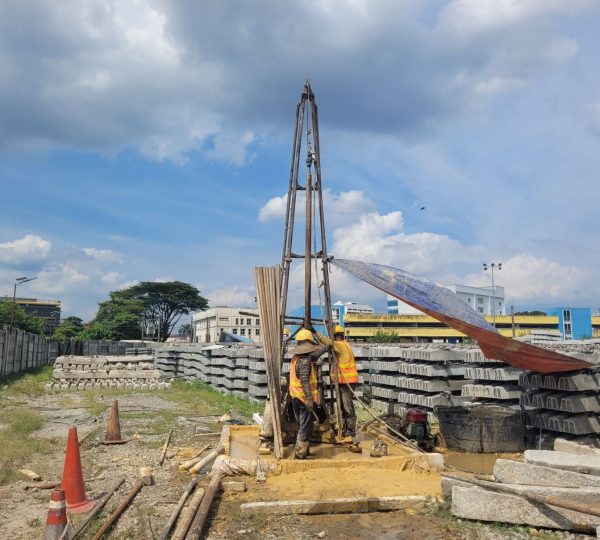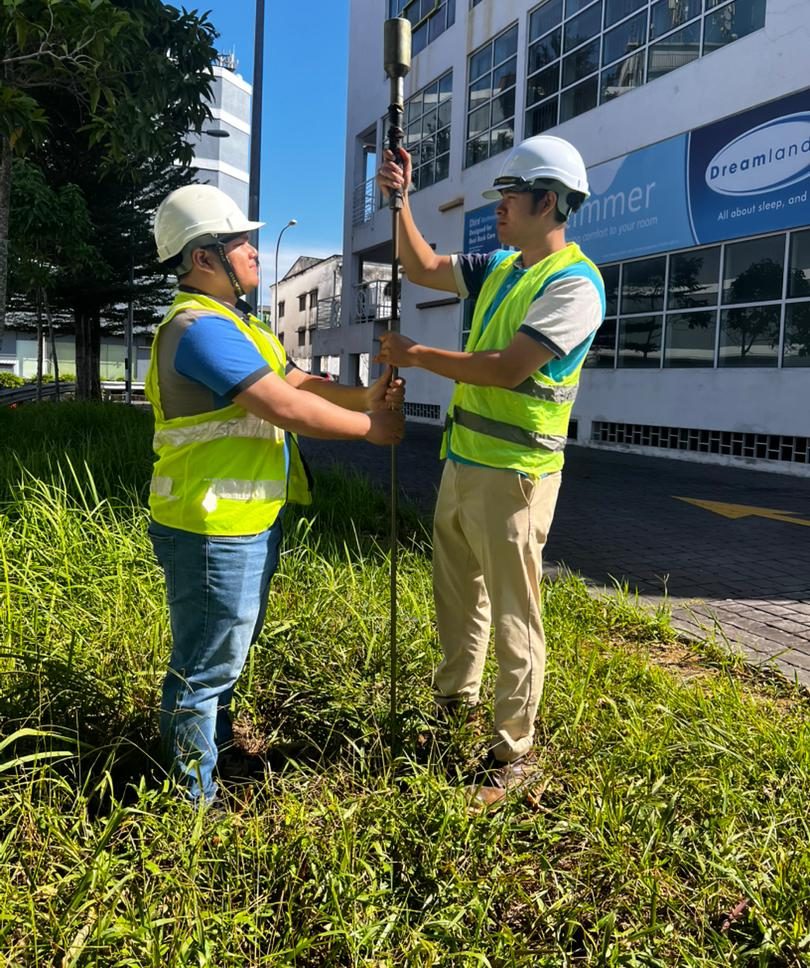
The Mackintosh Probe Test (MPT) is a commonly used in-situ soil investigation method in geotechnical engineering to quickly assess ground conditions. It is widely used in Malaysia and Southeast Asia for preliminary site investigations due to its speed, simplicity, and cost-effectiveness.
The test is carried out by driving a steel probe rod into the ground using a 4.5 kg hammer dropped from a standard height. Engineers record the number of hammer blows required to penetrate a maximum depth 15 meters. Each interval typically 300 mm with maximum blow 400 times, which provides an indication of the soil strength and consistency.
Why the Mackintosh Probe Test is Important
The Mackintosh Probe Test helps engineers:
•Identify soft or weak soil layers
•Detect changes in subsurface soil conditions
•Estimate the depth of firmer ground
•Support early-stage geotechnical assessment
Although it is considered a preliminary soil test, the MPT provides valuable data that guides further investigations.

Applications
The Mackintosh Probe Test is commonly used for:
•Building site investigations
•Road and infrastructure projects
•Slope and earthwork assessment
•Preliminary geotechnical surveys
Mackintosh Probe Test Services at Terra Axis
At Terra Axis, our geotechnical team performs Mackintosh Probe Tests as part of comprehensive soil investigation services. The test allows us to quickly understand subsurface ground conditions and recommend appropriate investigation or foundation solutions for your project.