At Terra Axis , we believe that a strong understanding of soil mechanics is fundamental to delivering reliable geotechnical solutions.
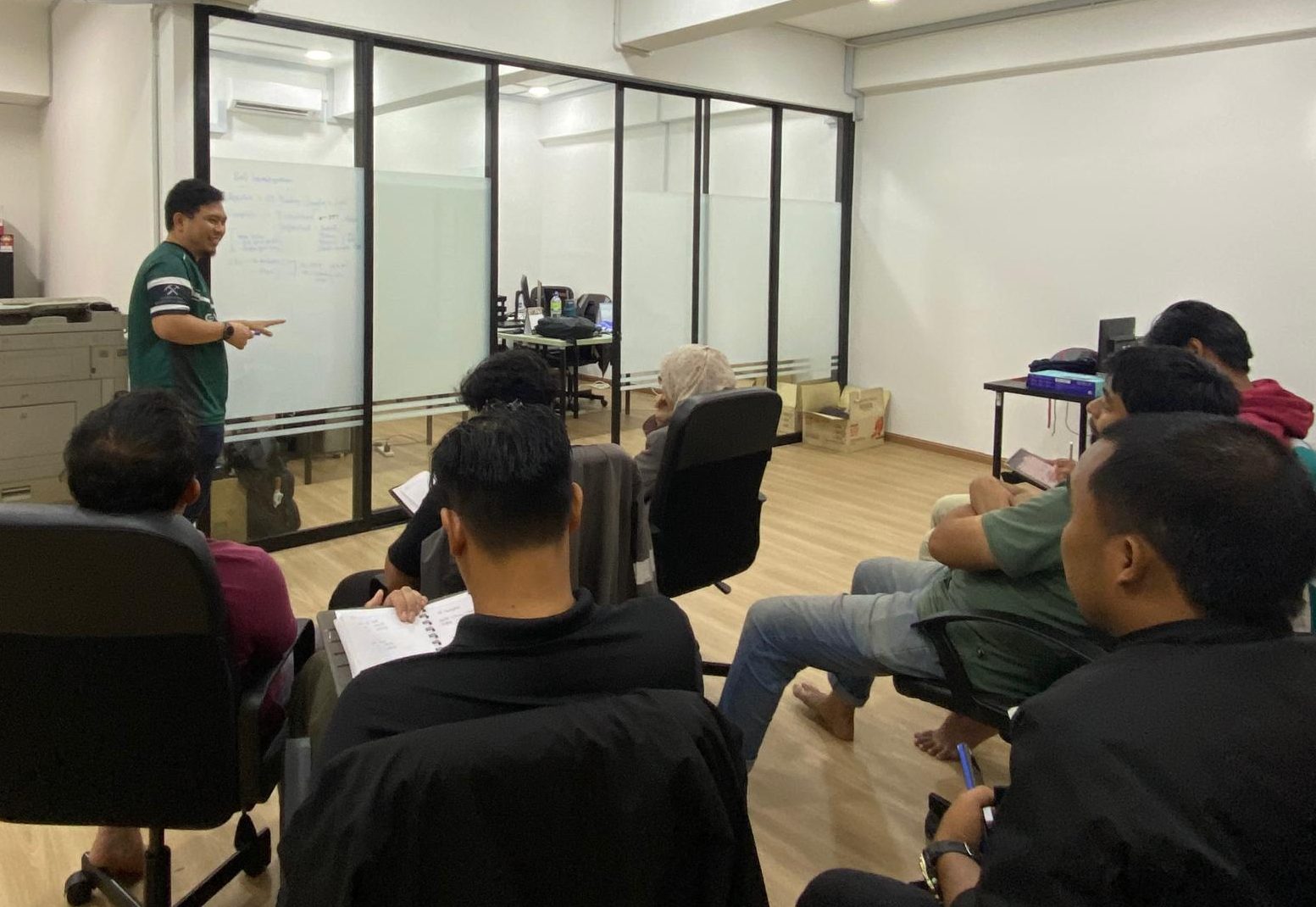
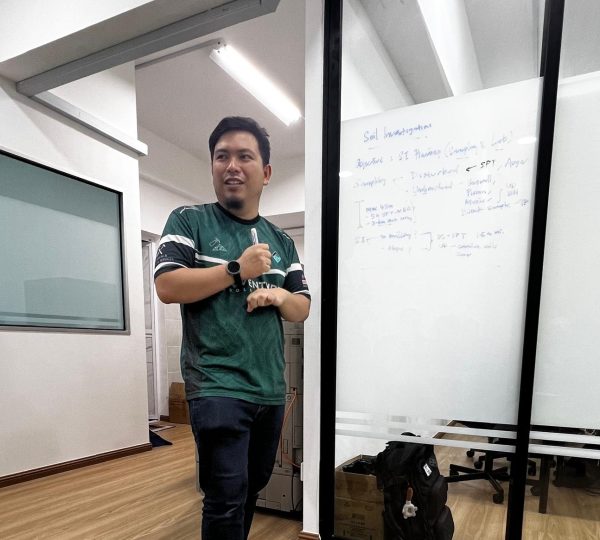
Recently, our Principal Geologist, Muhd Akhyaar Kok conducted an internal knowledge-sharing session focusing on the essentials of Soil Investigation (SI) and the critical role of geotechnical laboratory testing in understanding ground behaviour. The discussion moved beyond basic index properties and explored how chemical and engineering characteristics of soil directly influence real-world applications such as consolidation behaviour and shear strength.
One of the key highlights was revisiting the fundamentals of Triaxial and 1-D consolidation testing. The session walked through the differences between UCT, UU, CU, and CD tests, and how each method serves a specific purpose in determining shear strength. Understanding when and why each test should be applied is what distinguishes a routine investigation from a high-quality site characterization.
For engineering geologists, mastering these fundamentals means providing the critical ground context that enables engineers to develop designs that are safe, efficient, and grounded in reality.
This session was attended by our team together with the participation and support of colleagues from the Geoventure Group of Companies. It was an engaging discussion, and we look forward to seeing these insights applied in our upcoming projects.
For engineering geologists, mastering these fundamentals means providing the critical ground context that enables engineers to develop designs that are safe, efficient, and grounded in reality.
This session was attended by our team together with the participation and support of colleagues from the Geoventure Group of Companies. It was an engaging discussion, and we look forward to seeing these insights applied in our upcoming projects.